
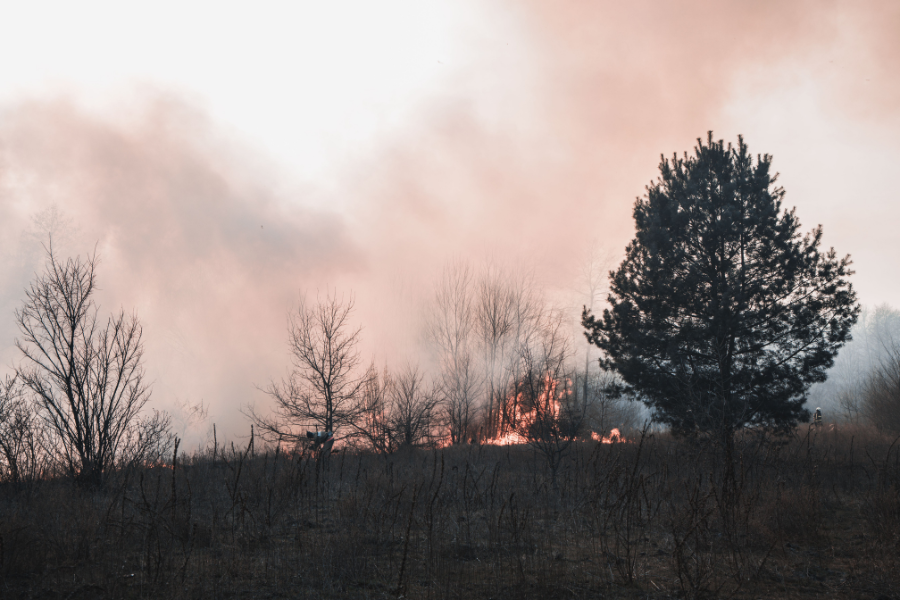
Wildfire smoke can affect our health, usually temporarily, by causing coughing, shortness of breath and irritation to the eyes, nose and throat.
For most people, symptoms improve quickly after moving indoors and away from the smoke.
Other symptoms can include dizziness, confusion, nausea.
Young children, older people, those who are pregnant and people living with an existing long term lung or heart condition may be more vulnerable.
People in one of these higher risk groups should try to stay indoors with windows and doors closed and should avoid outdoor exercise. If your home becomes uncomfortably hot, move to the coolest room, keep drinking fluids, and open windows once the smoke has cleared.
If you are living with a lung condition such as asthma or COPD, follow your escalation plan. Ensure you keep any medications or inhalers on hand and remember to use your preventer inhaler daily as prescribed. If you are unsure whether to start a rescue pack, speak to your GP practice or pharmacist first.
Symptoms can be delayed, so please be vigilant over the next few days.
If you do not have access to your repeat prescription medication, visit 111.nhs.uk to request an emergency supply. This is the quickest route and will direct you to a pharmacy that can help. If you cannot get online, call NHS 111.
Anyone who requires medical help should seek advice from NHS 111 or their GP. In cases of severe breathing difficulties or a medical emergency, call 999 or visit the emergency department at your local hospital.