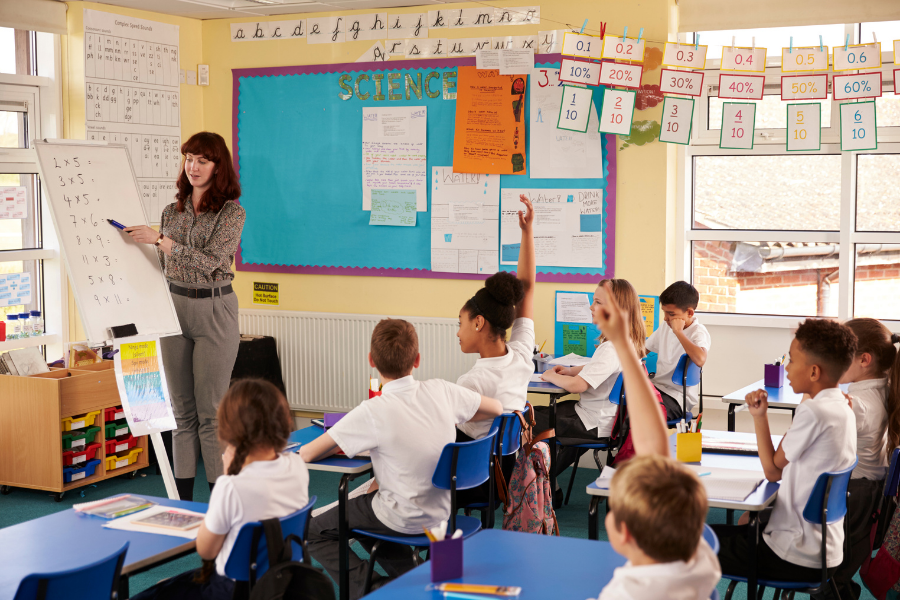
As children and young people across Norfolk and Suffolk head back to school, there are some simple things families can do to help everyone stay healthy and well as we move into autumn.
Returning to classrooms after the summer holidays means children are mixing with more people again, and common illnesses can spread quickly.
From checking vaccinations and practising good hygiene to knowing when to keep your child at home, here are some useful things parents and carers can do to help their family start the new school year well.
Check your child’s vaccinations are up to date
Vaccination is one of the best ways to protect children and young people against potentially serious illnesses.
Before the new school year gets under way, it is a good time to check that your child is up to date with their routine NHS vaccinations.
The vaccines children are offered depend on their age and date of birth. These include protection against illnesses such as measles, mumps and rubella, as well as HPV, meningitis, tetanus, diphtheria and polio as they get older.
If your child has missed a vaccination, it is usually not too late to catch up. You can check the NHS vaccination schedule or contact your GP practice if you are unsure.
Look out for your child’s flu vaccination
Children can catch and spread flu easily, and for some it can cause serious illness.
The NHS children’s flu vaccination programme gets under way during the autumn. Children from Reception to Year 11 are offered a flu vaccination each year, with most school-aged children receiving it at school.
For most children, the vaccine is given as a quick and painless nasal spray, although an injectable vaccine is also available.
Parents and carers should look out for information from their child’s school or School Age Immunisation Service and make sure they complete the consent process when invited.
Find out more about the children’s flu vaccine.
Help stop infections spreading
Schools are busy places, so encouraging a few simple hygiene habits can help reduce the spread of infections.
Remind children to wash their hands regularly with soap and warm water, particularly after using the toilet and before eating, and encourage them to catch coughs and sneezes in a tissue and then wash their hands.
Opening windows and letting fresh air into busy indoor spaces can also help reduce the spread of respiratory infections.
Know when your child should stay at home
It can sometimes be difficult to know whether a child who is feeling under the weather should go to school.
Children with a minor cough, runny nose or sore throat can usually continue to attend if they are otherwise well and do not have a high temperature.
If your child has a high temperature and is feeling unwell, they should stay at home until they are feeling better and their temperature has returned to normal.
Children with diarrhoea or vomiting should stay away from school or nursery until they have not been sick or had diarrhoea for at least 48 hours.
Different advice applies to some infectious illnesses, so check the NHS guidance if you are unsure.
Find out whether your child is too ill for school.
Make time to talk
Starting a new school, moving into a different year group or simply returning after a long summer break can bring a mixture of excitement and worry.
Making time to ask children how they are feeling – and giving them space to talk about anything that may be worrying them – can help.
The NHS has advice and support for parents and carers who are concerned about a child’s mental health and wellbeing.
Find out more about children and young people’s mental health services.
Know where to go if your child is unwell
Most common childhood illnesses get better on their own and can be safely managed at home.
Your local pharmacy can also offer advice about many common conditions and, through Pharmacy First, pharmacists can provide advice and treatment for seven common conditions without you needing to see a GP first. These include sore throat and earache for eligible children.
If you need medical help but are unsure what to do, use NHS 111 online or call 111. NHS 111 can assess what help you need and direct you to the most appropriate service.
For a life-threatening emergency, always call 999.