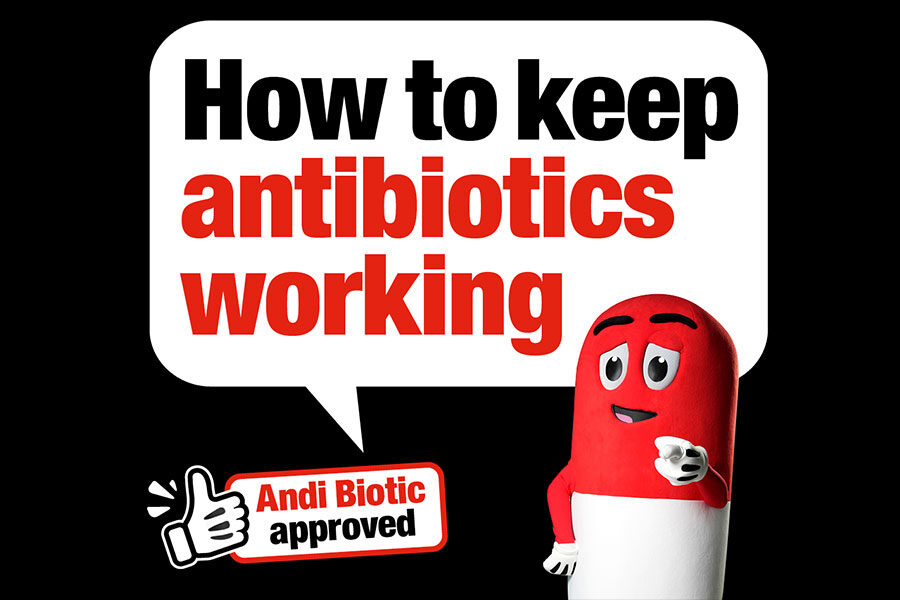
Use this page to learn what antibiotics are and when they should be used, as well as why they do not work for many common illnesses like colds and flu.
Learn what antimicrobial resistance is, why it is a growing concern, and what we can all do to ensure medicines continue to work for us in the future.
What are antibiotics?
Antibiotics are medicines that help treat or prevent some bacterial infections.
They work by killing bacteria or stopping them from spreading.
Antibiotics do not work for all infections.
- Many mild bacterial infections get better on their own without antibiotics
- Antibiotics do not work for infections such as colds and flu, and most coughs because these are caused by viruses
Your local pharmacy can help you manage minor illnesses at home. You can find out more on our Pharmacy services page.
You can find out more information about antibiotics on the NHS website.
What is antimicrobial resistance?
Antimicrobial resistance is when germs change so medicines no longer work well against them.
These germs can be:
- bacteria
- viruses
- fungi
- parasites
When medicines stop working:
- illnesses can spread more easily
- people can become very unwell
- infections can be harder to treat
One big reason this happens is because medicines like antibiotics are used too often, or when they are not needed.
This is an important problem for people in the UK and around the world.
You can learn more on the NHS website.
World Antimicrobial Resistance (AMR) Awareness Week
Every year, from 18 to 24 November, there is a World Antimicrobial Resistance Awareness Week.
During this week:
- people across the world spread important messages about antimicrobial resistance
- people learn why medicines like antibiotics must be used carefully and why this is important for everyone
Everyone can help by becoming an Antibiotic Guardian and making a promise to use antibiotics the right way.
Why is this also important for children?
Children get infections more easily than adults. Antibiotics are very important when a child has a serious bacterial infection, but antibiotics are not needed for many common illnesses like colds, and most coughs and sore throats.
The more antibiotics are used when they are not needed, the more likely they are to not work when we really need them.
Antibiotics can cause side effects like feeling sick or having diarrhoea.
This is why antibiotics should only be used when a doctor or nurse says they are needed.
More information can be found on the Just One Norfolk website.