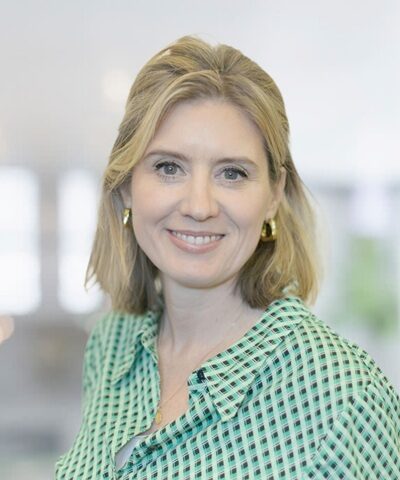
As I prepare to take up the role of National Medical Director for the Department of Health and Social Care and NHS England, I wanted to take a moment to reflect on my time working alongside colleagues, partners and communities across Norfolk and Suffolk, and to offer my heartfelt thanks.
It has been a genuine honour to serve as Executive Medical Director for our Integrated Care Boards (ICB). During this time, I have worked with extraordinary colleagues across health and care, local government, the voluntary sector, academia and our wider communities. Together, we have shared a commitment to improving the health and wellbeing of local people.
I have also been incredibly fortunate to work alongside talented and compassionate executive and clinical leaders at the ICB, whose support and shared commitment have helped drive so much of the progress we have made together.
Looking back, I feel incredibly proud of what we have achieved. There are too many things to list, so please don’t be offended if I’ve not mentioned other wonderful achievements, but I’ve picked out a few that are special to me.
Across cancer services, more people are now being diagnosed earlier, when cancer is easier to treat. We have seen a 4% increase in cancers detected at an early stage, and more than 100 lung cancers have been identified through our new targeted screening programmes.
In planned care, fewer people are waiting overall (the total waiting list is down by 6.5%), and those that are waiting are receiving care more quickly – we first eliminated two-year waits and then 18-month waits, and we are now close to eliminating 12-month waits across our system.
Urgent and emergency care has also changed significantly. Ambulance waits are shorter, and people are being discharged from our hospitals more quickly. The introduction of Urgent Care Coordination Hubs across both systems has also helped many people access more appropriate care at or close to home when they need it, and reduced unnecessary ambulance call-outs and hospital conveyances.
Both the quantity and quality of work delivered in primary care are extraordinary. National patient survey results also show improving experiences of care, with 78% of patients in both Norfolk and Suffolk reporting a good experience of their GP practice. Satisfaction with local pharmacy services was even higher, with 87% of patients in Norfolk and 88% in Suffolk reporting a good experience last year.
Prevention and improving long-term health outcomes remain very close to my heart, and something I’m looking forward to doing more on in my national role. Together, we have delivered record levels of NHS Health Checks, including achieving our learning disability annual health check targets for 2025/26 – a fantastic achievement by practices and primary care teams. We also remain the highest referrers nationally to diabetes prevention programmes and have improved the detection and management of hypertension – vital to preventing heart attacks and strokes.
In Norfolk and Waveney, smoking at the time of delivery is now at its lowest ever level. Since the launch of the SmartStart service, 198 babies have been born smokefree – a 180% increase compared with 2024/25. Latest NHS England data also shows Smoking at the Time of Delivery (SATOD) rates have fallen from 12.1% in 2022 to 7.6% today. This is already helping to reduce the number of babies born with growth restriction, giving more children the very best start in life.
Suffolk maternity services are also consistently outperforming national ambitions, with SATOD rates at 4.9% – well below the 6% target. Through an opt-out referral model, almost every pregnant person who smokes is offered support, with referral rates of 99% at West Suffolk Hospital and 94.6% at East Suffolk and North Essex NHS Foundation Trust (ESNEFT). Quit outcomes are also extremely positive, with carbon monoxide-verified four-week quit rates reaching 81% at West Suffolk Hospital. This is making a real difference in improving outcomes and reducing health inequalities.
Vaccination rates for seasonal infections and childhood diseases are also among the highest in the East of England, helping to significantly reduce the impact and spread of infectious illnesses such as flu, pneumonia and COVID-19.
We have also made significant progress in mental health services. The waiting list for NHS Talking Therapies is now among the lowest in the country, supported by targeted population health management (PHM) approaches to help ensure people are aware of and able to access support quickly and easily.
For people living with more complex mental illness, our main provider, Norfolk and Suffolk NHS Foundation Trust (NSFT), is also on a significant improvement journey, as reflected in its recent CQC report. I had the opportunity to support teams through part of this journey and was continually struck by the passion, resilience and determination of staff to improve services for patients. There is always more to do, but it has been incredibly encouraging to see how far they have already come over the past few years.
Women’s health has also seen significant momentum across both systems. We have expanded education and support for women, as well as for staff working across primary care, helping to improve awareness, access and consistency of care.
We have also introduced innovative digital services, including the Women’s Health app, and brought a number of services that previously required a hospital visit into primary care settings, making them quicker and easier for women to access. This includes services such as menopause support, ring pessaries and long-acting reversible contraception.
In children and young people’s services, I am particularly proud of the progress we have made in delivering more joined-up, family-centred care. This includes training around 600 staff across Norfolk through a system-wide children’s palliative and end of life care programme, helping to improve support, confidence and experiences for children and families during some of the most difficult times in their lives.
Research and innovation are also flourishing across Norfolk and Suffolk. In innovation, we remain the only ICB in the country to be recognised as an Insite location.
We have also achieved record levels of grant income, hosting more than £20 million in National Institute for Health and Care Research (NIHR) funding this year. Through our Research Engagement Network (REN) work, we have broadened participation in research across our communities, helping ensure more people have the opportunity to take part in and benefit from research.
I am pleased to see growing levels of research taking place within primary care, which will be strengthened even further when the recently approved Primary Care Commercial Research Centre opens in Breckland, helping to expand and accelerate research opportunities across our communities.
I am also proud of the partnerships we have built with our universities and education providers. The opening of the graduate entry medical school, alongside the forthcoming dental school and audiology courses at the University of East Anglia, will help build a pipeline of future healthcare professionals for our region and beyond. As the daughter, niece and cousin of dentists myself, that is an area especially close to my heart!
Finally, as our ICB continues to develop as a true strategic commissioner, it is fantastic to see the increasing use of evidence, insight and data, alongside our new population segmentation model. This will help us better understand the needs of our communities at every stage of life and strengthen our commissioning approach to improve population outcomes and continue reducing health inequalities.
Above all else, what I will remember most is the compassion, resilience and dedication of colleagues working across our health and care system every single day. I have been continually inspired by the difference people make for patients, families and communities across our region.
Although I am incredibly honoured to take up my new role, leaving this system is not easy. Norfolk and Suffolk will always hold a very special place for me, and I will remain deeply proud of everything we have achieved together.
Thank you to all the colleagues, partners, patients, carers and communities who have supported, challenged and inspired us to keep improving. It has truly been a privilege to work alongside you.
As I begin this next chapter, I do so with great excitement and enormous gratitude for the experiences, friendships and partnerships formed here. I look forward to continuing to champion high-quality, compassionate and evidence-based care for patients across England.
Warm regards,
Professor Frankie Swords
Executive Medical Director
NHS Norfolk and Suffolk ICB