
Babies usually develop their first milk teeth at around six months old.
By the age of three, children typically have all 20 of their baby teeth. These will start to fall out around age five or six, making way for 32 adult teeth.
Learn more about children’s teeth.
How to brush children’s teeth
Regular brushing helps remove plaque, a sticky substance that can cause tooth decay and gum disease if not properly managed. Brushing twice a day is an effective way to keep teeth and gums healthy.
Babies
Start brushing your baby’s teeth with fluoride toothpaste as soon as the first milk tooth appears, usually around six months. To clean babies’ teeth, sit them on your knee with their head resting against your chest. Use small circular motions to brush all surfaces, including the gums.
Older children
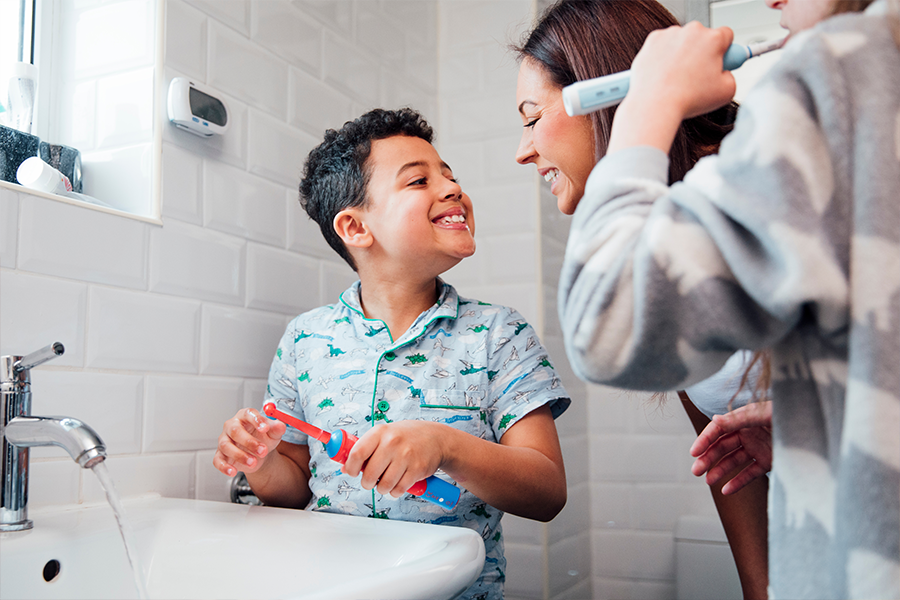
Establish a regular teeth cleaning routine. Brush your child’s teeth twice a day, in the morning and before bed. Supervise brushing until they are at least seven years old to ensure they are doing it correctly.
When cleaning children’s teeth, stand behind them and tilt their head back. Use small circular motions and encourage them to spit out the toothpaste without rinsing, to retain the fluoride’s benefits.
Supervise brushing until children are at least seven years old to ensure they use the right amount of toothpaste and don’t swallow it.
How to care for the teeth of children with Dr Ranj and Supertooth!
For children aged 0 to 3:
Reluctant brushers
Not all children enjoy brushing their teeth. Here are some tips to make it easier:
- Use a timer or an app like Brush DJ.
- Sing songs or use stickers as incentives.
- Brush your teeth at the same time to set an example.
The Tooth Brushing Song | Hey Duggee
Tips for children and young people with SEND and learning disabilities
Brushing teeth
The below video contains top tips for children who may be reluctant to brush their teeth because of sensory difficulties. Many thanks to Sussex Community NHS Foundation Trust.
Toothbrushing for children with sensory difficulties
The below video, from the Sheffield Health and Care Partnership, has some information for people with learning disabilities and their carers.
Mouth care for people with learning disabilities: Brushing your teeth
Mouth care products
The purpose of this guide is to provide you with information on mouth care products which may be available and useful for
children and young people within a special educational setting.
Access the guide to mouth care products
Visiting the dentist
Preparing a child with special educational needs and disabilities (SEND) for a dental visit can help make the experience smoother and less stressful. Here are some tips to help you get started.
Start early
Begin dental care routines early to make them a normal part of your child’s life. This includes regular brushing and flossing.
Use positive language
Talk about the dentist in a positive way. Avoid using words that might cause fear, such as “pain” or “hurt”.
Familiarise your child with the environment
Show your child pictures or videos of the dental office. Some dental practices offer virtual tours via their websites.
Role-playing
Practice a dental visit at home using a toothbrush and a mirror. Let your child play the role of the dentist and the patient.
Read books or watch videos
There are many children’s books and videos about visiting the dentist that can help demystify the experience.
Bring comfort items
Allow your child to bring a favourite toy or blanket to the appointment to help them feel more secure.
Schedule a pre-visit
If possible, arrange a pre-visit to the dental office so your child can meet the dentist and staff in a non-threatening way.
Stay calm and supportive
Your child can pick up on your emotions, so try to stay calm and positive. Offer plenty of praise and reassurance throughout the visit.
Explain the process
Explain what will happen during the visit in simple, reassuring terms. Let them know that the dentist is there to help keep their teeth healthy.
Plan a reward
Plan a small reward for after the visit to give your child something to look forward to.
Specialist dental care for children with additional needs
All children, including those with additional needs, are entitled to dental care. Services should make necessary adjustments to ensure this care is accessible.
In some cases, such as the examples outlined below, specialist dental care may be the most suitable option.
If you think your child may need specialist dental care, or if you’re unsure, please visit the websites below for more information. Referrals to these services can be made either via your child’s usual dentist or their GP.
Learn more about dental care for people with special needs
First trip to the dentist
Schedule your child’s first dental visit by their first birthday. Your dentist will let you know how often you should be seen and importance of arranging regular check-ups.
See the below video, produced by our neighbours in the Mid and South Essex Integrated Care System.
Taking your child to the dentist
Other ways to keep teeth healthy
Avoid sugary drinks
Limit sugary drinks and snacks to prevent tooth decay. Encourage water and milk as the main drinks for your child.
Visit the NHS website for more information about healthy diet and nutrition.
Using a trainer cup
Introduce a trainer cup before your child’s first birthday to help them transition from bottles and reduce the risk of tooth decay.