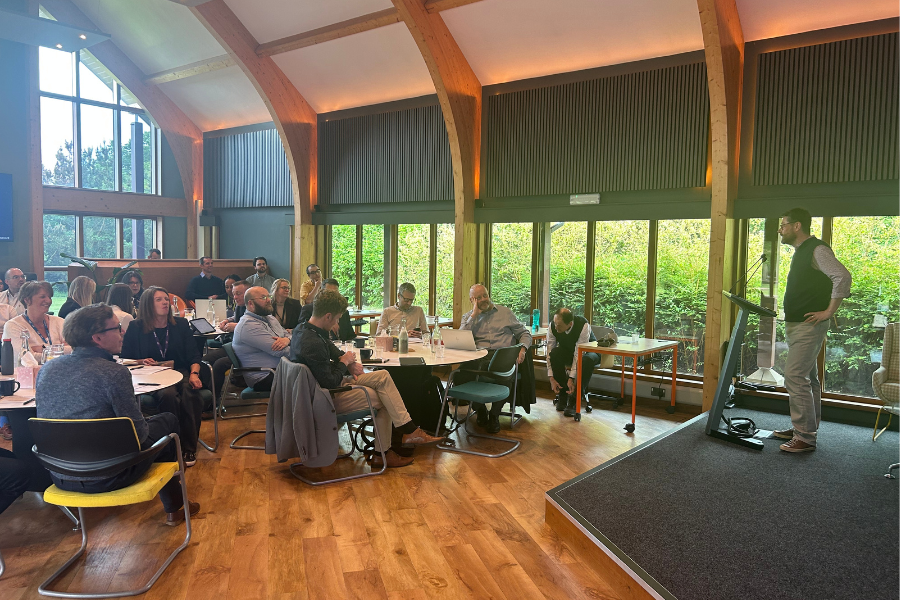
New approaches to identifying people most at risk of ill health earlier, tackling health inequalities and supporting more care closer to home were among the key topics discussed at a conference bringing together NHS leaders, clinicians, analysts and population health experts from across Norfolk and Suffolk.
Hosted by Prescribing Services Limited (PSL) in Buxton, the event brought together colleagues from NHS Norfolk and Suffolk Integrated Care Board (ICB) working across population health management, intelligence, insights and neighbourhood teams to explore how data-driven approaches can help improve outcomes for local people and support delivery of the ICB’s Population Health and Commissioning Strategy.
The strategy sets out an ambition to help people live longer, healthier and happier lives by focusing on prevention, reducing health inequalities, improving access to care and supporting more joined-up services across communities. Throughout the conference, delegates discussed how population health management can help turn those ambitions into practical action by using data and insight to identify need earlier, target support more effectively and ensure resources are focused where they can make the greatest difference.
Howard Martin, Executive Finance and Contracts Director at NHS Norfolk and Suffolk ICB, said: ‘The creation of NHS Norfolk and Suffolk ICB gives us a real opportunity to build on the strengths and expertise that already exist across our system. Our Population Health and Commissioning Strategy sets out a clear ambition to improve healthy life expectancy, reduce inequalities and support people to live healthier lives for longer.
‘Delivering that ambition requires organisations to work differently together, making better use of data, innovation and insight to understand need and target support where it can have the greatest impact. Events like this help bring together colleagues and partners around a shared vision for improving outcomes for local people.’
‘Today was an exciting opportunity for many to learn first-hand how the Eclipse system can directly support delivery of that ambition through its ability to identify individuals with reversible clinical risk, support positive engagement with them, and optimise their interventions.’
Supporting the shift to prevention
A key focus of the conference was how health and care organisations can move from reacting to illness towards preventing it wherever possible. Delegates explored how population health management approaches can help identify people who may be at increased risk of poorer health outcomes, enabling earlier intervention and more personalised support before needs escalate.
Discussions highlighted the opportunities created by bringing together intelligence, clinical expertise and local knowledge to better understand the needs of communities and tackle the factors that contribute to poor health outcomes. Particular attention was given to supporting neighbourhood-based models of care, reducing variation in outcomes and ensuring people receive the right support at the right time.
Using data and insight to improve outcomes
Throughout the afternoon, attendees heard how the Eclipse Population Health Management platform is being used to support population health approaches across Norfolk and Suffolk. Sessions explored topics including risk stratification, patient engagement, neighbourhood delivery models, long-term condition management, genomics and NHS App integration, demonstrating how data and digital innovation can support clinical decision-making and service improvement.
Delegates also heard examples of how population health management approaches can help clinicians identify patients at highest risk of hospital admission or deteriorating health, allowing earlier support and intervention that can improve outcomes while reducing pressure on frontline services. Examples shared during the event highlighted how targeted, data-led interventions can support people living with long-term conditions and help make best use of NHS resources.
Julian Young, Eclipse Partnership Lead at PSL, said: ‘As a locally based organisation, Eclipse is proud to work alongside colleagues across Norfolk and Suffolk ICB as a long-term strategic partner committed to delivering meaningful improvements for patients, clinicians, and health services across the region. This partnership is founded on a shared ambition to improve outcomes for the people of Norfolk and Suffolk, combining the ICB’s commitment to excellence with Eclipse’s nationally recognised, data-driven solutions, collaborative approach, and practical delivery expertise to support sustainable transformation across the system.
‘This conference, aligned with the formation of the new ICB, represents a significant milestone for both the system and the Eclipse team, and an important opportunity to help position Norfolk and Suffolk as one of the leading integrated care systems nationally.’
Putting patients at the centre
Patient engagement and reducing health inequalities were recurring themes throughout the conference. Discussions focused on how services can be designed around the needs of local communities, combining digital innovation with targeted outreach to improve access, encourage greater self-management and ensure that people who face the greatest barriers to healthcare are not left behind.
Delegates explored how patient-led approaches can support the ambitions of the Population Health and Commissioning Strategy by helping people become active partners in their own care, improving experiences and outcomes while supporting the wider shift towards prevention and community-based healthcare.
Mark Burgis, Executive Director of Primary Care and Neighbourhood Health (Norfolk and Waveney) at the ICB, said: ‘For patients, the difference we want to make is simple – helping people get the right support before they reach crisis point and ensuring care feels joined up around their individual needs.
‘Events like this are important because they bring together the people, ideas and expertise needed to design services around the lives of local residents. By listening to our communities and understanding what matters most to them, we can create more personalised care, help people stay independent for longer and improve their experience of health and care services.’
Dr Alexander Royan, Director of Strategic Planning and Resilience, Digital and Intelligence at NHS Norfolk and Suffolk ICB, said: ‘One of the most encouraging things about the day was seeing colleagues from different teams come together with a shared focus on improving outcomes for local people. Whether we’re working in intelligence, neighbourhood teams, population health management or clinical services, we all have a role to play in helping people stay healthier for longer.
‘The discussions demonstrated how data can help us identify unmet need earlier, support neighbourhood teams to target interventions more effectively and ensure resources are focused where they will have the greatest impact. By continuing to work collaboratively with partners, we can turn insight into action and deliver tangible improvements for the people and communities we serve.’
Looking ahead
The conference concluded with an interactive discussion focused on future priorities, opportunities for collaboration and the next steps required to support delivery across the new integrated care system. Participants identified opportunities to further strengthen population health management approaches, share learning across neighbourhoods and continue developing innovative ways to improve outcomes for local communities.
The event marked the beginning of a programme of continued collaboration between NHS Norfolk and Suffolk ICB and PSL, with further engagement planned over the coming months to support delivery of the Population Health and Commissioning Strategy and help create a healthier future for people across the region.