
Patient Participation Groups (PPGs) are an essential way for patients and GP practices to work together to improve primary care services. Since 2016, all GP practices in England are required to have a PPG and to make reasonable efforts to ensure that membership reflects the diversity of the practice population. PPGs give patients a structured route to provide feedback, share experiences, and support service improvement.
What PPGs do
PPGs typically:
- help practices understand the needs of patients
- support patients in using digital tools to manage appointments and health information
- promote and gather feedback through surveys
- communicate service updates and changes so that patients understand how to access care
- work collaboratively with practice staff to improve the patient experience.
The work of PPGs in Norfolk and Suffolk
Hear from Our PPG Members
From assisting at vaccination clinics and leading wellbeing walks to supporting patients in using the NHS App, discover how Patient Participation Group (PPG) members are making a real difference in their communities—and what inspired them to volunteer.
Case studies
Across Suffolk and Norfolk, PPG volunteers are helping improve patient experiences and strengthen local healthcare. In Saxmundham, community‑led projects—from a Health Film Club to peer‑support networks and recycled equipment—reduce isolation and improve access to support.
In Botesdale, a structured volunteer model and support desk have boosted patient access and eased pressure on staff. Aldborough’s outreach‑based PPG engages patients within existing community groups and through an online “Patient Voice Forum,” widening participation.
Meanwhile, Sheringham’s PPG mobilised over 50 volunteers to support 69 vaccination sessions before relaunching its community activities, showing the resilience and adaptability of local volunteers.
Read the full case studies below.
Case study: Aldborough Surgery PPG
Aldborough Surgery is situated in a large rural area 7 miles from the coast of North Norfolk. It serves a population of approximately 3,700 spread out across numerous parishes between Cromer to Aylsham and Edgefield to North Walsham.
Aldborough village offers a wide variety of social and volunteering opportunities including exercise classes, organised walks, various sports and leisure clubs, Arts and Crafts opportunities and ‘Village Care’ which provides a weekly lunch and a volunteer driving service for those (mainly elderly) who cannot get to doctor or hospital appointments.
Aldborough Surgery had been running a successful Patient Participation Group (PPG) for some years. When needed the surgery always had plenty of willing helpers happy to support vaccination clinics and in developing the community woodland on a piece of landing belonging to the practice. However, with so many other volunteering and social opportunities on offer nearby membership of the main PPG committee was starting to decrease.
So the practice manager and PPG Chair came up with a new model for keeping in touch with their patients and listening to their views about accessing care from the surgery. Instead of asking patients to come to the practice, the PPG Chair has gone out into the community and now represents the PPG at all the community opportunities Aldborough has to offer. Feedback collected whilst out and about is then fed back to the practice.
Alongside this the practice has also developed a special area of their website to act as a ‘Patient Voice Forum’. The aim of this is to keep patients up to date about what’s going on at the surgery, but also to provide learning opportunities for the Surgery on patient needs and ideas, and to achieve wider patient reach. This includes surveys, feedback mechanisms, surgery news, health and wellbeing tips, and links to all the local support and social opportunities available in Aldborough.
Aldborough Surgery sees the importance of becoming a member of the local community and working with their patients to make sure they really understand what matters to them.
Case study: Botesdale Health Centre PPG
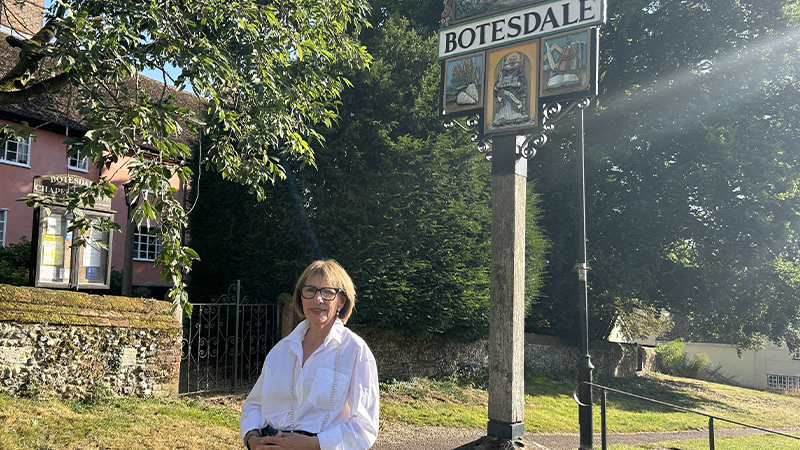
All general practices are required to have a Patient Participation Group (PPG), and Janet Russell brought together a group of active volunteers to work collaboratively with Botesdale Health Centre and the wider community.
Since 2018 she has transformed this rural Suffolk PPG into a vibrant hub of community engagement and empowerment. Janet facilitated the development of a PPG leadership team consisting of health professionals and 44 volunteers who work collaboratively to improve access, experience and outcomes for patients and carers. In addition, Janet has facilitated the development of a PPG volunteer co-ordinator and volunteer project leads system.
She has since stepped down as PPG chair, leaving a strong foundation for an active and sustainable volunteer community engagement model for the PPG.
Janet has led many initiatives including establishing a volunteer community engagement model that assists with tackling health inequalities, and the establishment of a PPG information and support desk within the Health Centre. This twice weekly initiative has improved patient experiences around access to services, reduced pressure on staff and services and led to better staff experiences.
Case study: Saxmundham Health PPG
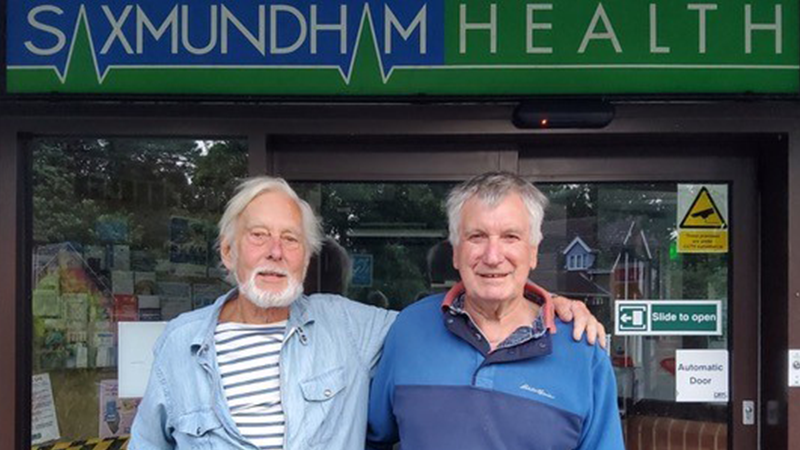
Dr Hilary Graham and Mike Golding have harnessed the strength of the community into three collaborative initiatives to tackle loneliness and identify practical solutions to local NHS problems. Firstly, the Saxmundham Health Film Club hosts monthly events at a local Community Centre.
Transport is provided to patients who need it, and refreshments are available. Saxmundham Health initially focused on elderly isolated patients, but more members have since joined and there are now 40 regular members, who can also propose film choices for the following ‘season.’
The Film Club has been featured in both the East Anglian Daily Times and the Daily Mail. Secondly at the Saxmundham Patient Information Network (SPIN) patients support other patients by sharing their ‘lived experience’ of operations, outpatient procedures or losing weight with the Saxmundham Diet. Patients are a comforting resource for other patients, sharing what it is really like.
Finally, Medical Equipment recycling involves collecting unused sticks, frames, wheelchairs, crutches, and bathing equipment and offering it to local residents in need, improving accessibility to crucial equipment. These services help the community become more resilient and stronger and demonstrates how willing volunteers can make a significant impact on the quality of many local lives.
Case study: Sheringham PPG
Sheringham Patient Participation Group (PPG) was formed in 2008 with membership consisting of patients and some practice staff. The group met monthly in the GP surgery and over the years managed to raise funds for the practice and waiting room equipment, held health awareness mornings for residents, took part in surveys and research and have had representatives on local health and voluntary groups.
Like the rest the country, this all came to an abrupt stop in March 2020 with the outbreak of COVID-19. As a group we kept in touch and were waiting to be able to get back together.
In December 2020 the Practice Manager approached us to look at coordinating the outside marshalling for the forthcoming vaccination sessions starting in January 2021.
The Practice was not only commissioned to vaccinate our own over 70-year-olds and vulnerable patients, but those from another large local surgery as well. An invitation was sent out to all the PPG members but also to possible interested residents. Within a couple of weeks, we had a list of 50+ people wanting to volunteer – quite overwhelming. We contacted another PPG that had been successfully vaccinating for a few weeks in the county, asking for tips. They kindly offered great advice with a risk assessment and volunteering role form. We quickly adapted this to our local needs. Equipment such as high visibility vests, torches and refreshments were purchased. As time went on, we ended up being inundated with kindly donated cakes, biscuits, tea and coffee (all well appreciated).
Our first week was very memorable with daily snow blizzards, temperatures of -3 degrees and a foot of snow! We were absolutely amazed that with all the appalling weather, 97% of our over 80’s pitched up for their vaccination. We heard stories of some of these elderly people not having been out of their village for over a year, which was reflected in some interesting driving! As well as marshalling the surgery car park we also had volunteers at three other nearby church car parks.
By the end of 2021, a great team of volunteers had marshalled at 69 vaccination sessions. It was hard at times, particularly with appalling weather conditions, but a lot of friendships were formed, and fun was had. The surgery laid on a thank you lunch with entertainment in late summer with a generous gift for everyone. By September we could see that it might be a time to try and restore our PPG meetings, especially as we had lost several members due ill health. October saw our relaunch with two open meetings, repeated on a morning and evening weekday. We managed to have a good turn out and recruited more members, including a new virtual group.
We are back to monthly meetings, fundraising with a recent successful tombola outside a local supermarket. We’re planning a mental health awareness morning later in the year, regular health issue displays, monthly speakers and are looking at local transport for residents needing to attend health related appointments.
Setting up and running a PPG
Visit the Patients Association website for tips and guidance on how to set up and run a PPG, including free tools, templates, and practical support to help patients and practices work together effectively.
Their PPG Toolkit includes downloadable resources, step‑by‑step guidance, and video explainers designed to help practices establish, grow and sustain successful PPGs, as well as encourage members to share their own projects and feedback.
How to get involved
Some PPGs meet in person, others meet online, and some use a mix of both. Information about PPGs is usually available on practice websites or notice boards. You can also ask your practice team directly about joining or forming a PPG.